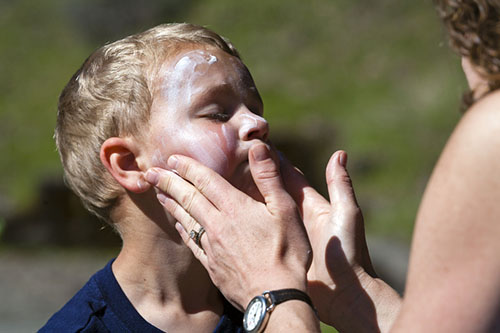

- Use a broad-spectrum (UVA/UVB) sunscreen that is SPF 15 or higher every day. If you’ll be outdoors for an extended period of time, use a water-resistant, broad-spectrum (UVA/UVB) sunscreen that is SPF 30 or higher.
- Avoid tanning your skin, and never use UV tanning beds.
- Take proper steps to prevent sunburns.
- Seek out shaded areas, particularly between 10 AM and 4 PM.
- Wear protective clothing and accessories when you’re outdoors, including UV-blocking sunglasses and a broad-brimmed hat.
- Follow proper sunscreen application guidelines: you should be using 1 ounce (equal to 2 tablespoons) to cover your entire body, applied 30 minutes before you go outside. Sunscreen should be reapplied every two hours, as well as immediately after swimming or excessive sweating.
- Conduct monthly skin self-exams and see a dermatologist for an annual professional skin exam
Keep in mind that skin cancer prevention efforts should begin at birth. Keep newborns out of the sun as much as possible, and use an appropriate sunscreen for babies over the age of 6 months.
Use the “ABCDEs of skin cancer” to spot early warning signs Skin cancer is a highly treatable disease, especially when it is caught and treated early. This makes regular skin self-exams a key component of effective cancer prevention.
In addition to a professional, dermatologist-conducted skin exam at least once per year, you should be conducting skin exams at home on a monthly basis. Closely examine all areas of your skin, looking for atypical moles and possible melanomas.
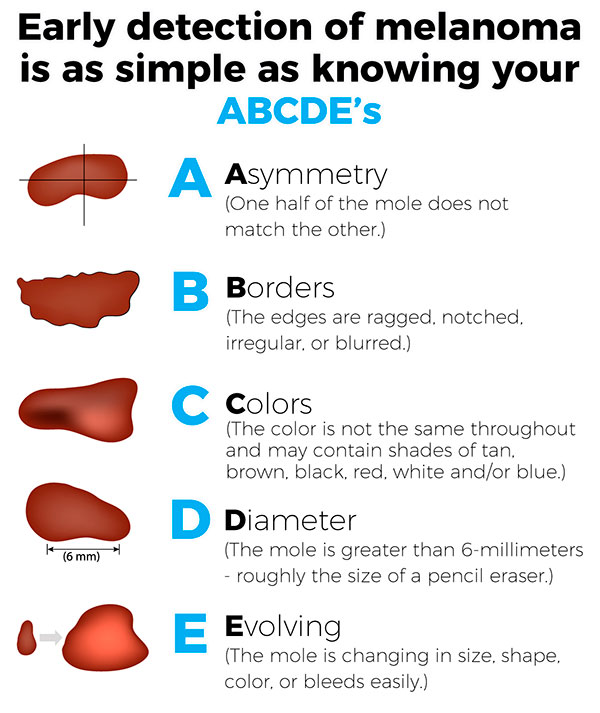
If you notice any of the following “ABCDE” warning signs, schedule an appointment with your dermatologist as soon as possible:
A is for Asymmetry: Common (normal) moles tend to be fairly symmetrical, with either a round or oval shape. However, you may have an atypical mole if it has an irregular, asymmetrical shape.
B is for Border: If a mole’s borders are uneven, irregular, or even jagged/scalloped, it may be atypical. Common moles tend to have smooth, generally even borders.
C is for Color: If a single mole has multiple colors, that is a warning sign. Melanoma can be made up of various shades of brown, black, or tan, with blue, red, and white appearing as it grows larger. In contrast, a normal mole is usually just one shade of brown.
D is for Diameter: If you have a mole that is the same size (or larger) as a pencil eraser (about 6mm or ¼ inch across), you should get it checked. However, keep in mind that melanomas can be smaller than this, so don’t use this guideline to disqualify any suspicious spots.