

About one in six Americans will face skin cancer in their lifetime, but early detection can make a world of difference. Skin cancer is highly treatable in its early stages, making it incredibly important to take a proactive role in your health.
 
Monthly checks allow you to observe any changes in your skin, increasing the likelihood of detecting – and treating – cancer as soon as possible.
Early-detection
How to Do a Skin Cancer Check

When it comes to effective skin cancer prevention, consistency is key.

We recommend selecting one day per month (for example, the 1st of every month) for a quick but thorough skin check. You may find it helpful to set a monthly reminder on your digital calendar or smartphone or even write it down on a monthly to-do list.

Skin self-exams are easiest to do in front of a full-length mirror, preferable in a well-lit space. You can also use a handheld mirror to examine any hard-to-see areas, such as the backs of your thighs. Beginning with your scalp, work your way downwards. Don’t forget your palms and the soles of your feet, your ears, and even your nailbeds. In many cases, asking a friend or family member to examine spots such as your back and scalp is the best way to avoid missing anything.
Tanning bed
What to Look For

Regularly checking your skin will provide you with an invaluable “baseline,” making it much easier to notice anything new or changing. If you observe any of the following, schedule an appointment to get checked by a dermatologist:

  • A growth that has changed in size/shape, with a transparent, pearly, multicolored, tan, brown, or black appearance.
  • A mole, brown spot, or birthmark has increased in size or thickness or changed in texture or color. Any moles, brown spots, or birthmarks that are larger than a pencil eraser should also be checked.
  • A spot or sore that continues to hurt, itch, scab, or bleed.
  • An open sore that fails to heal within three weeks.

Annual Skin Exams

In addition to monthly at-home skin checks, it is also recommended that you see a dermatologist at least once a year. If you have a high risk of skin cancer, you may be advised to schedule visits more frequently.

How to Prepare for a Skin Exam

Generally, a professional skin exam is a simple and straightforward process. However, there are five things you can do to get ready:

  1. Perform a skin self-exam. If you notice any new, changing, or questionable spots, bring up your concerns during your appointment.
  2. Remove nail polish from fingernails and toenails so that your doctor can thoroughly examine all areas.
  3. Wear your hair loose (or be prepared to remove any hair clips or hair ties) so that your doctor can get a clear look at your scalp.
  4. Either avoid wearing makeup to your appointment or bring makeup remover.
  5. Don’t hesitate to ask questions. Your dermatologist can provide their professional perspective and often resolve any concerns you may have.

What to Expect During a Skin Exam

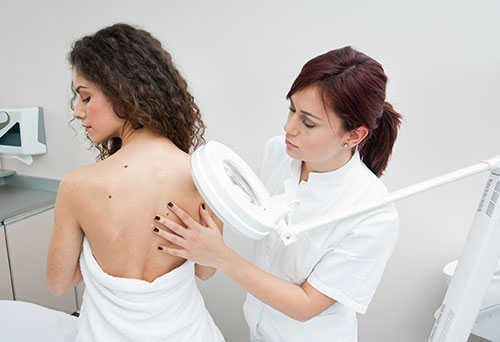
Typically, you will remove your clothes (leaving your undergarments on), replacing them with a medical gown for easier examination.

Your doctor will then closely examine your skin, particularly focusing on areas that would be difficult for you to check on your own (such as your scalp, behind your ears, and your back). They may use a dermatoscope, which is a small, handheld magnifying device that allows for a detailed view of the skin’s top layers.

If your dermatologist finds any concerning spots, they may perform a biopsy. For the biopsy, they will gently remove part or all of the skin lesion and send it to a laboratory for analysis. If the results show that the lesion is cancerous, your doctor will explain the type of skin cancer and ideal treatment options.

Prioritize Your Health with Early Detection Now

Remember: skin cancer is highly curable when it is caught and treated as early as possible. It’s never too late to start – schedule your skin exam appointment today!