Facts & Statistics

Skin cancer is the most common cancer in the United States and worldwide.

  • In the U.S. more than 9,500 people are diagnosed with skin cancer everyday.
  • 1 in 5 Americans will develop skin cancer by the age of 70.
  • More than 2 people die of skin cancer in the U.S. every hour.
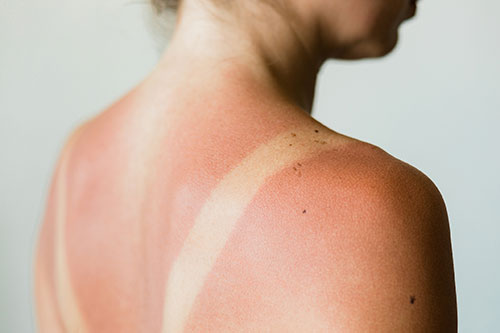
  • Having 5 or more sunburns doubles your risk for melanoma.
  • More people are diagnosed with skin cancer every year in the U.S. than all other cancers combined.
  • The annual cost of treating cancers in the U.S. is estimated at $8.1 billion: about $4.8 billion for nonmelanoma skin cancers and $3.3 billion for melanoma.
skin prevention
Melanoma skin cancer facts
  • It’s estimated that the number of new melanoma cases diagnosed in 2021 will increase by 5.8 percent.
  • The number of melanoma deaths is expected to increase by 4.8 percent in 2021.
  • In the past decade (2011-2021), the number of new invasive melanoma cases diagnosed annually increased by 44 percent.
  • An estimated 7,180 people will die of melanoma in 2021. Of those 4,600 will be men and 2,580 will be women.
Nonmelanoma skin cancer facts
  • The diagnosis and treatment of nonmelanoma skin cancers in the U.S. increased by 77 percent between 1994 and 2014.

Actinic Keratosis

Risk Factors

Actinic Keratosis (AK) is a very common skin precancer. Understanding the risk factors as well as what causes AKs can help you prevent them from developing. Being aware of the risks will also help you spot AKs early, when they are highly treatable. Actinic Keratosis affects more than 58 million Americans. If left untreated, they can turn into squamous cell carcinoma, a type of skin cancer.

These factors increase your risk:

  • History of unprotected exposure to ultraviolet (UV) radiation from the sun or indoor tanning. This includes people who work outdoors in the sun, people with a bald scalp or thinning hair and those who have had sunburns.
  • Geographic location: The closer to the equator you live, the more likely you are to have AKs.
  • Weakened immune system due to medical condition or medications.
  • Fair skin: While anyone can develop AKs, they occur far more frequently in people with fair skin.
  • Age over 40: AKs are most common in people age 40 and older.

Treatment

If you have one or more actinic keratoses (AKs), it’s a sign of skin damage that puts you at a high risk for developing skin cancer. Identifying and treating these precancerous lesions helps you reduce the risk.

Your treament options depend on how many lesions you have, where they are, your age and overall health. Options include:

  • Surgical procedures
  • Topical treatments
  • Photodynamic therapy
  • Combination therapy

Basal Cell Carcinoma

Risk Factors

Basal cell carcinoma (BCC) is caused by damage and subsequent DNA changes to the basal cells in the outermost layer of skin. Exposure to ultraviolet (UV) radiation from the sun and indoor tanning is the major cause of BCCs and most skin cancers.

Understanding what causes BCC and the factors that increase your risk of getting it can help you prevent or detect it in its earliest stages, when it’s easiest to treat.

These factors increase your BCC risk:

  • UV exposure from the sun or indoor tanning.
  • History of skin cancer, including squamous cell carcinoma (SCC) or melanoma.
  • Age over 50: Most BCCs appear in people over age 50.
  • Fair skin: People with fair skin have an increased risk.
  • Male gender: Men are more likely to develop BCC.
  • Chronic infections and skin inflammation from burns, scars and other conditions.

Treatment

When detected early, most basal cell carcinomas (BCCs) can be treated and cured. Prompt treatment is important, because as the tumor grows, it becomes more dangerous and potentially disfiguring, requiring more extensive treatment. Certain rare, aggressive forms can be fatal if not treated promptly.

If you’ve been diagnosed with a small or early BCC, a number of effective treatments can usually be performed on an outpatient basis, using a local anesthetic with minimal pain. Afterwards, most wounds can heal naturally, leaving minimal scarring.

Options include:

  • Curettage and electrodesiccation (electrosurgery)

    This treatment involves the dermatologist scraping or shaves off the BCC using a curette (a sharp instrument with a ring-shaped tip), then uses heat or a chemical agent to destroy remaining cancer cells, stop the bleeding and seal off the wound.

    The physician may repeat the procedure a few times during the same session until no cancer cells remain. Typically, the procedure leaves a round, whitish scar.

    Curettage and electrodesiccation can be effective for most small BCC lesions. In these instances, the procedure has cure rates close to 95%

  • Mohs surgery
  • Excisional surgery
  • Radiation therapy
  • Photodynamic therapy
  • Cryosurgery
  • Laser surgery
  • Topical medications
  • Medications for advanced BCC